Four years of invoices and inverter data from a 6.4 kWp zero-export rooftop PV system with a BYD battery: what each part cost, what it saved, and which one was a bad buy.
Rooftop PV, four winters later
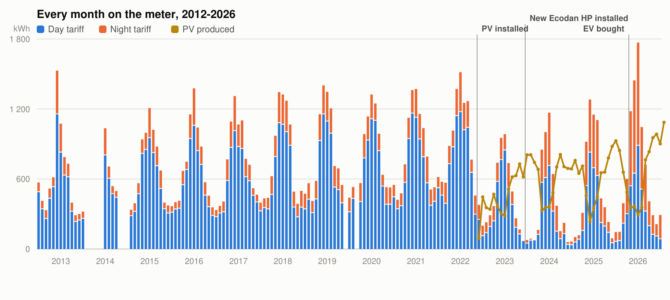
Four years of invoices and inverter data from a 6.4 kWp zero-export rooftop PV system with a BYD battery: what each part cost, what it saved, and which one was a bad buy.
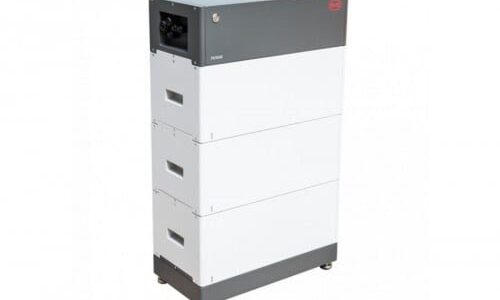
Data collected over nearly two years shows our BYD 7.68kWh LiFePO4 solar battery operates at an average of 94% efficiency (charged vs discharged). Capacity degradation is at 2%
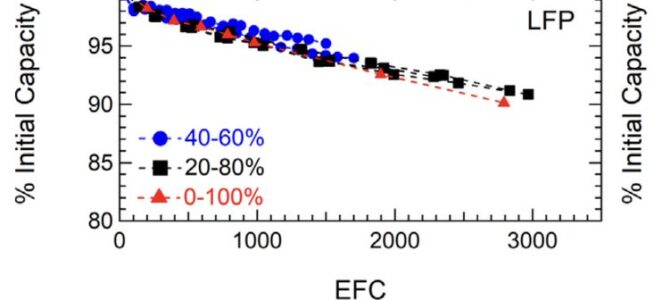
Interesting paper on "Degradation of Commercial Lithium-Ion Cells as a Function of Chemistry and Cycling Conditions" here: https://iopscience.iop.org/article/10.1149/1945-7111/abae37/pdf; Three degradation factors are explored: 1) Temperature, 2) DoD and 3) Discharge rate. (1/2) I specifically care about LiFePo4 (LFP) chemistry, because our solar system's BYD battery is such. Strange to see that a 100% DoD doesn't…
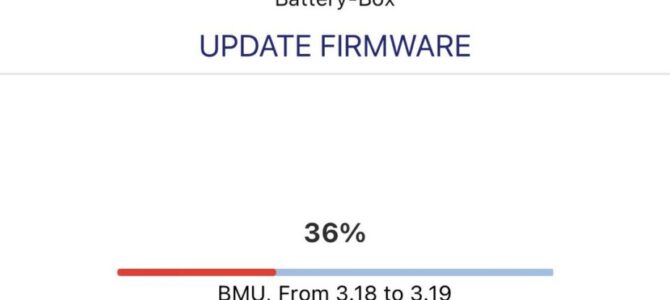
Our solar system’s battery app (BYD HVS 7.7kWh) says its BMU needs an update. No release notes or details on what’s being fixed. Feeling brave and proceeding with the update anyway, WCGW
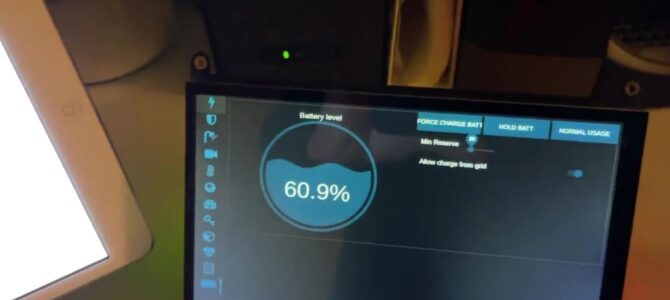
Node-Red dashboard to control the BYD PV storage battery behavior over Modbus TCP. Storm is coming and power failure is likely? No problem, force-charge the battery, including from grid, and put it on hold for emergency power backup purposes. Neat 🙂
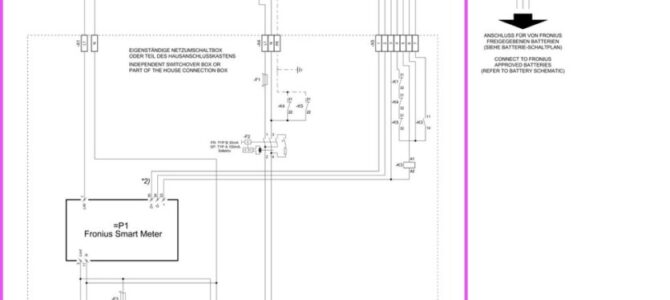
Now that the BYD battery is here, I finished the automatic switchover box. It physically disconnects the house from the grid and instructs the inverter to start in island mode. Upon grid availability again, the inverter monitors its stability and switches back to grid-tie mode. First time building such a distribution box, I realize the…
What is a reasonable Depth of Discharge % for my PV system’s BYD 7.7kW LFP battery,so to maximize its longevity? Should I keep SoC between 20%-80% e.g. 60% DoD?The inverter default battery SoC limit configuration is 5%-100%, but 95% DoD feels like it would be bad for the battery