A few days ago I walked into the garage and our Tesla was completely dead. Black screen, no response from the door handles, and not even the Bluetooth advertisement that a sleeping Tesla always sends. The evening before I had parked it and plugged it into the Wattpilot as usual.
With 12V from a bench supply on the two leads behind the tow eye cover I could open the frunk and get to the low-voltage battery. The car booted into a wall of red, “High voltage fuse A blown”, and Service Mode showed DTC P0A9501 with the pyro disconnect flagged red and a squib resistance of 5.744 ohms.
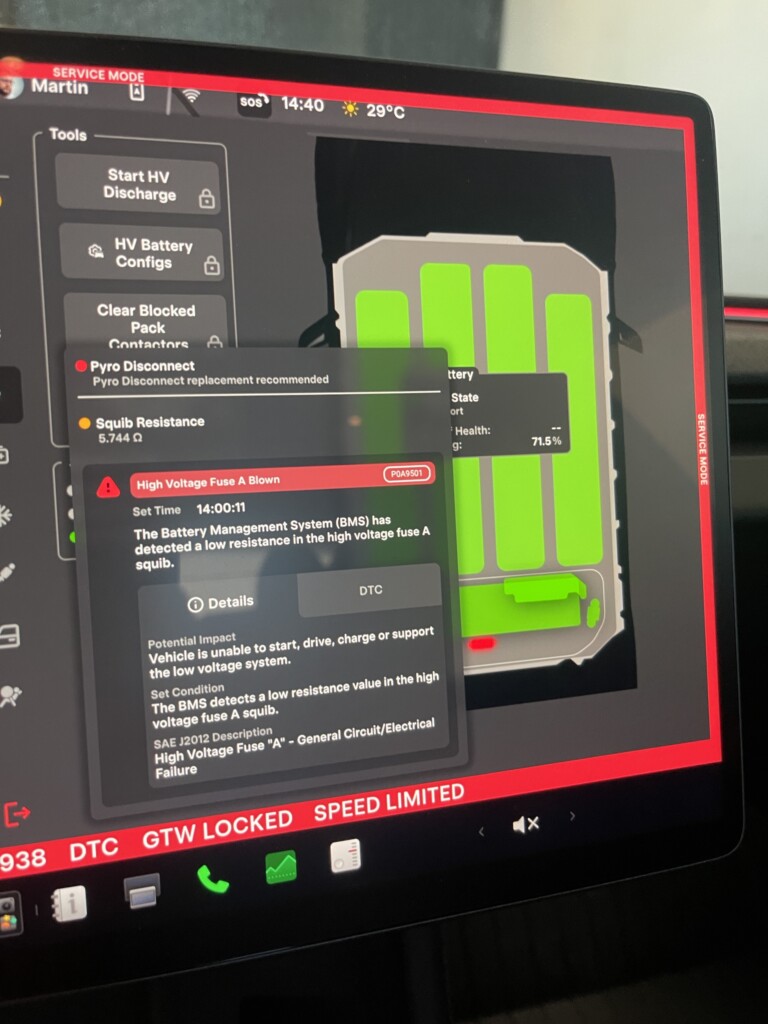
The pyro disconnect is a one-shot explosive fuse inside the battery pack that cuts the high voltage circuit in a crash. Mine had not fired, but the car believed it might not fire when needed, and that is enough for it to shut everything down. The car still charged and drove, so I took it to the Bucharest service center (400 km) and they replaced the high voltage controller and the pyro disconnect under warranty. I had it back less than 24 hours after spotting the problem.
My first theory was a power surge from the grid, as the car lives on a charger wired into my PV and battery system. Luckily I log pretty much everything: the Home Assistant recorder, TeslaMate and an ESP32 running the Tesla BLE proxy a few meters from the car. The BLE proxy turned out to be the most useful. A sleeping Tesla still advertises over Bluetooth (the phone key works that way), so the proxy hears the car when the cloud API shows nothing. This is the timeline I put together:
- 19:04–19:30 – the charge port latch cycles disengaged/engaged three times on its own and the gear selector briefly reads “Invalid”. Parked, plugged in, nobody in the car. Looking back, this was the first symptom.
- 20:55:01 – the BLE advertisement vanishes. This is when the car died, to the second.
- overnight – nothing on the grid in the recorder: no outage, no sag, voltage 237–255 V, frequency 50 Hz. So it was not the grid.
- next morning – TeslaMate shows one unbroken 16-hour offline gap.

The BMS measures the resistance of the squib (the ignition element of the pyro fuse) all the time, because a fuse that cannot fire is a safety device that does not exist. Healthy is roughly 1.0 to 5.0 ohms, mine read 5.744. The alert text says low resistance though, and my live reading was high, so the measurement was bouncing out of its window in both directions. To me that looks more like a corroding contact than a cleanly dead part. The BMS cannot tell a drifted measurement from a compromised fuse, so it locks everything down, including the DC-DC converter that keeps the 16V battery charged, and that battery alone lasts a couple of hours.
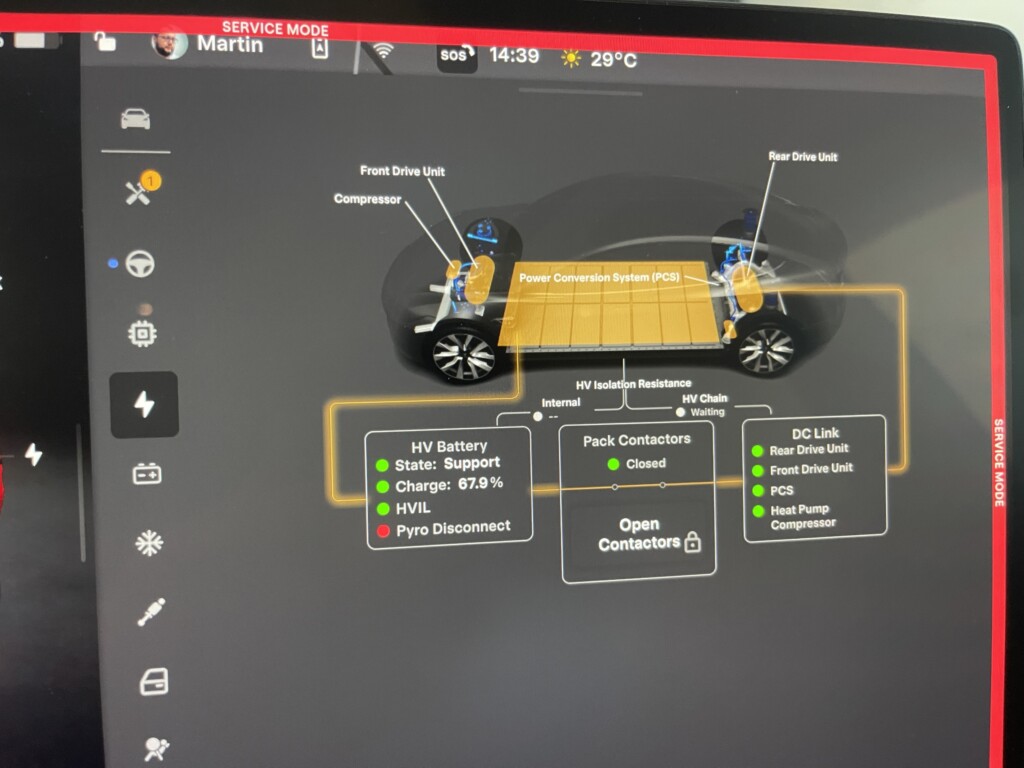
That the fuse itself was fine I could see in Service Mode: pack contactors closed and 381 V on the DC link. A fired pyro fuse means a flatbed.
Tesla Motors Club has a thread on exactly this squib resistance warning, and at least two cases where the HV bus dropped mid-drive for no apparent reason, with locked wheels and a flatbed.
Why the measurement drifted Tesla won’t tell me, but there is a clue in their own paperwork. In November 2025 Tesla added two steps to the Model 3 and Model Y service procedure for replacing the high voltage controller:
- apply dielectric grease to the X484 connector
- tuck the pyro disconnect harness underneath the ancillary bay harness
Dielectric grease keeps moisture out of a connector, and re-routing a harness stops it chafing. My car failed in exactly that circuit eight months later, so I bet on a corroding connection and not on a dead chip.
The Wattpilot and the battery
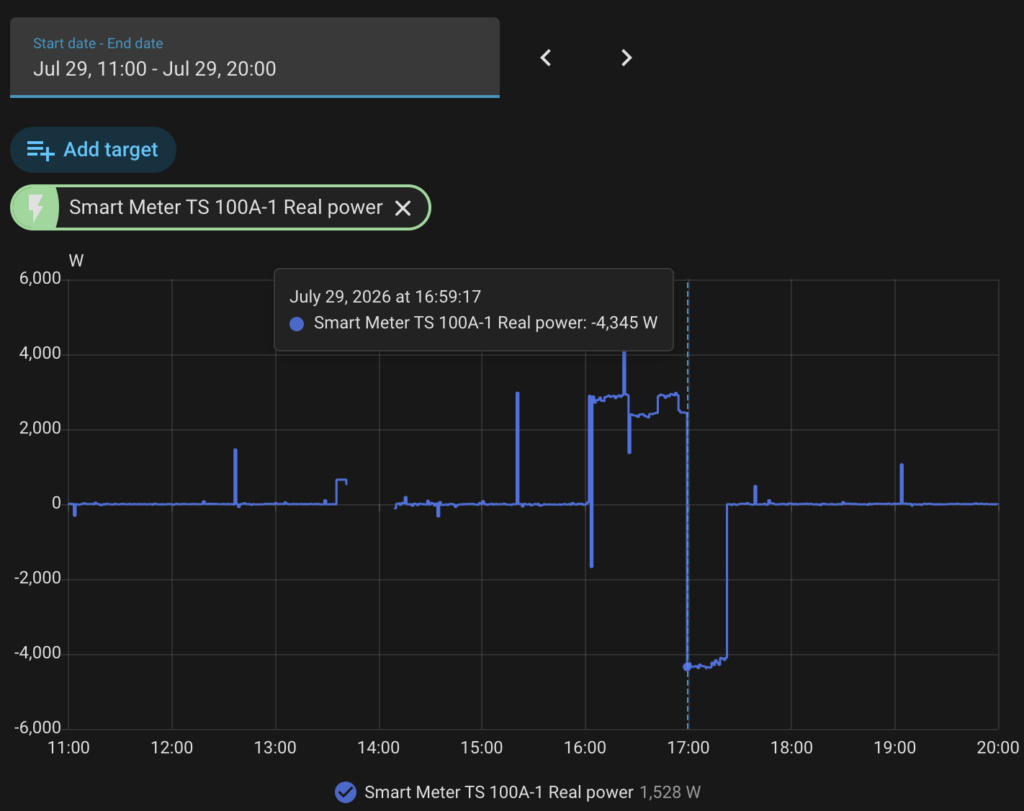
The car took two things down with it. The local API of the Wattpilot froze three minutes after the car came back online and stayed frozen until a factory reset. The inverter kept discharging the home battery to help charge the car, so when the car finished charging the house exported 1.6 kWh to the grid in 23 minutes. Now a watchdog automation in Home Assistant resets the storage registers when the battery discharges to the grid with no consumer for three minutes.