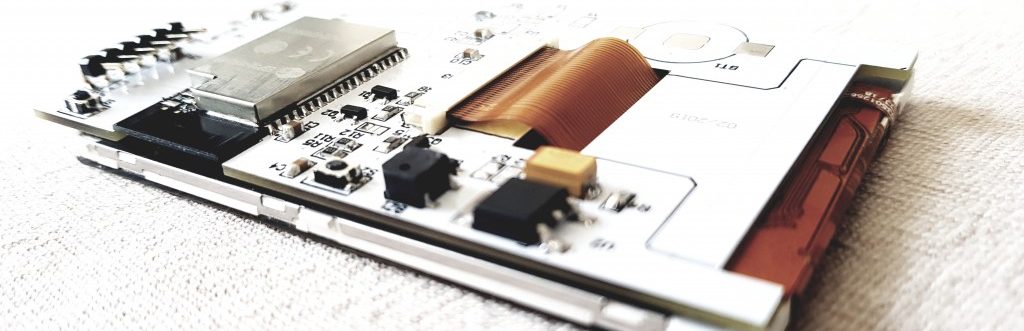
I have always wanted to connect my remote RFM12B -based nodes to the Internet, I have finally managed to do so. It was relatively easy, based on the excellent work of Adam Neilsen with his SerialIP library SerialIP is a port…
Funky v2 low power example
I have consolidated my accumulated so far experience on running the ATmega32U4+RFM12B based Funky v2 in low power mode in this example sketch. I managed to bring the power consumption down to 0.04mA, which makes it possible for the Funky v2 to run on…
Detecting USB connection on the Funky v2
When designing low-power code for the ATmega32U4-based Funky v2 (code, optimized for running on battery power), it is important to power down all unused peripherals as soon as possible in the code. The USB circuitry draws significant amount of power, so naturally…
Frequency counting test
This is something I long wanted to try out – frequency counting with my Funky v2. I used Albert’s Arduino frequency counter library for the purpose. I’d test it by doing 6 kHz PWM and try to count that. The interrupt…
Siri-like voice chat with Raspberry Pi : keep kids busy for a while :)
Here is a fun project to try out: a Siri-like voice talk with your Raspberry Pi, its a lovely way to attract youngsters and keep them entertained for a while. I use three components for the project, code is mainly…
The Raspberry Pi TFT PCB arrived
The Raspberry Pi TFT PCB that I described here has arrived yesterday; I quickly soldered my TFT on it and gave it a test. ll works great, here is a small demo:
Funky v2 as RFM12B to Raspberry Pi gateway
Funky v2 enumerates as a CDC device when plugged in to your Raspberry Pi without the need of any driver, so it is pretty easy to get it working as a RFM2Pi board. Useful If you decide that for some reason…
Video of the LTC3108 energy harvesting board with solar cell
I made a short video of the LTC3108 energy harvesting board with a solar cell. The test is done indoors, it was completely dark outside. Light source is a single 23W CFL bulb, around meter away. The breakout board has…
More “Gotchas” on the LDO regulator issue in Funky v2
Apparently, as I have found out, the MCP1703 will leak current if voltage applied to the output gate and nothing on the input, while the MCP1700 does not. This is the case, when you power the Funky v2 from a CR2032…
Funky v2’s LDO to blame for high sleep current. Now fixed
I have confirmed by suspicion that the on-board LDO voltage regulator is to blame for my troubles as described yesterday. I experienced the exact same situation with battery powered Funky v2 high sleep current as @Capnbry describes here, so I…
High sleep current issue with Funky v2 sorted out
The Funky v2 high sleep current situation turned to be my multimer going crazy when using a noisy 3.3V power supply. When powering the Funky v2 from couple AA batteries, I got 0.13-0.14mA sleep current using the sketch below. Still…
Drat, and double drat!
Testing the new Funky v2’s low power modes early this morning, I got a constant draw of 3mA, no matter the sleep mode and power saving techniques used.. “Drat, and double drat!” I hope it is a software thing, not a hardware…
Funky v2 – finally
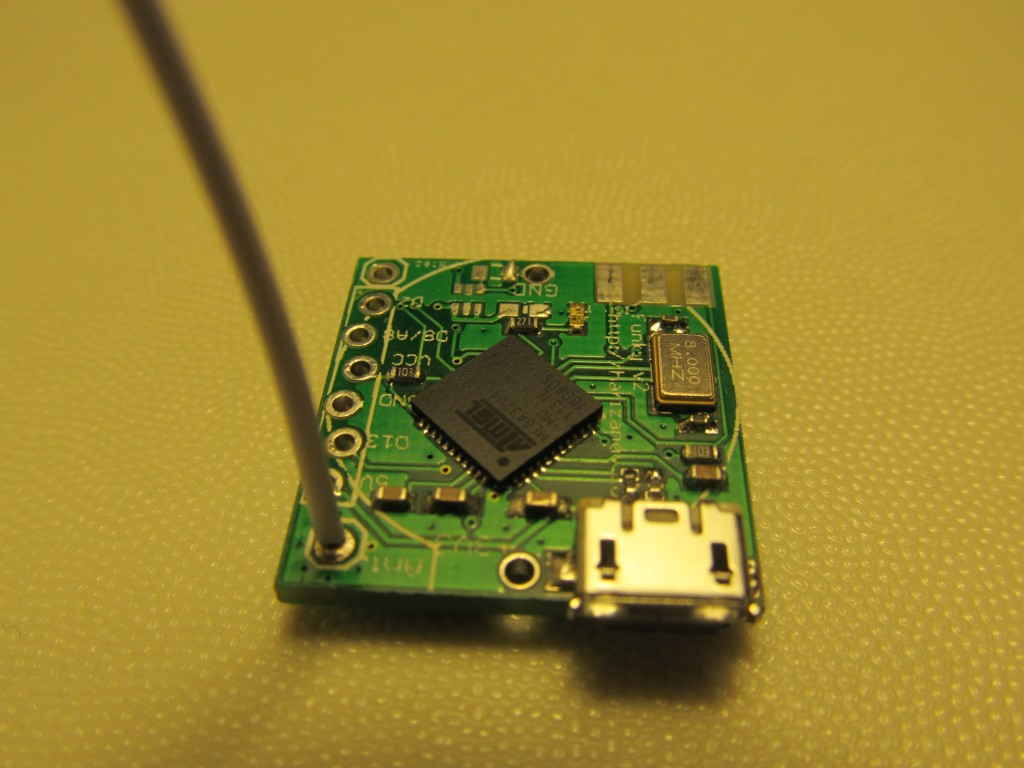
I got the revised Funky v2 PCBs yesterday and just finished putting together one. It is a painful (eye-hurting too) process, since I do the soldering by hand. It took me 1.5hrs to build this one, I will have to come up…
RGB LED
I’ve never played with RGB LEDs before, got myself couple to try out on Funky v2. The Funky v2 only has 1 pin with PWM, so I used the SoftPWM library instead: An Arduino library to produce PWM signals on…
Energy harvesting breakout board
I have put up a small LTC3108 breakout board based on Robert’s design that I also tested out. A re-cap for those that didn’t follow my energy harvesting posts: The LTC3108 is a highly integrated DC/DC converter ideal for harvesting and managing…
Raspberry Pi TFT board
I enjoy my DIY TFT board so much that I decided to create a more permanent setup. I laid out a board design that will have non-rectangular shape and supposedly fit better on-top the Pi. Here is how it…